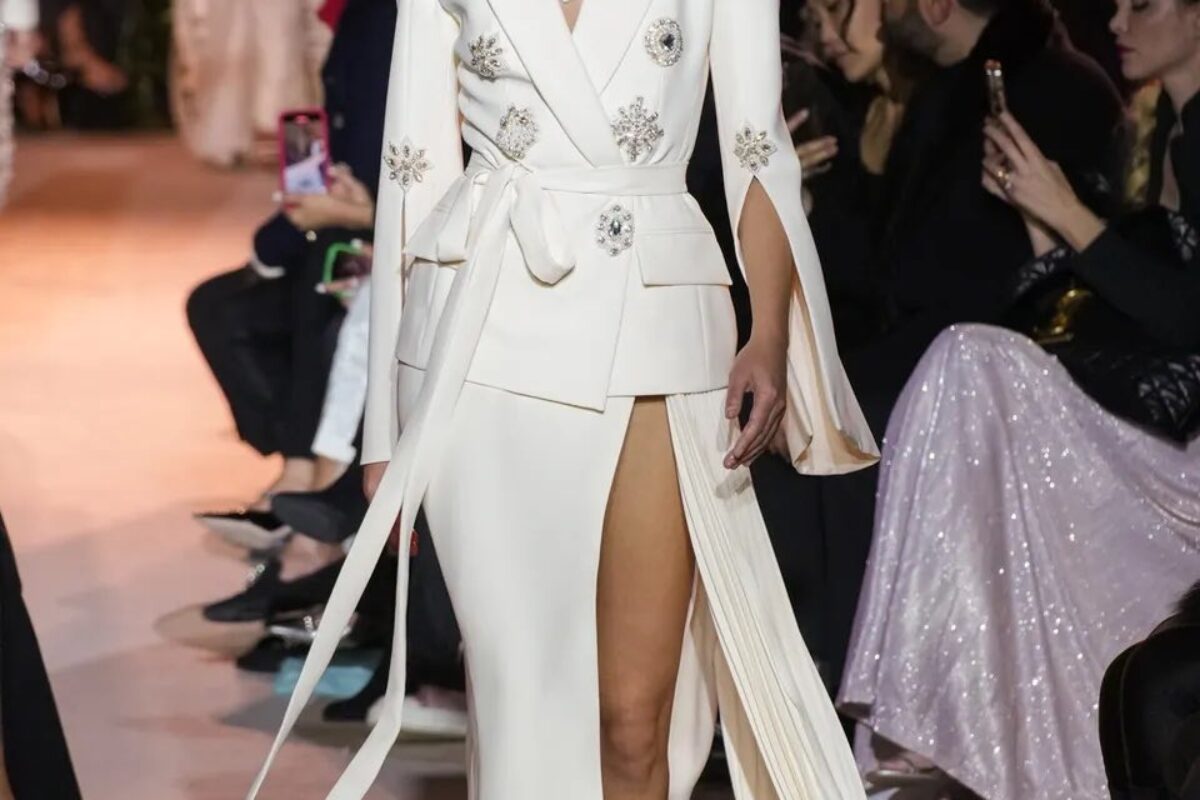
AI CAN generate fashion ideas. AI CANNOT become a fashion brand |
Artificial intelligence has entered fashion, and everywhere else, with extraordinary speed. It can generate campaign imagery in seconds, suggest silhouettes, analyse consumer behaviour, predict demand and even help write the language surrounding a collection. According to the BoF–McKinsey State of Fashion 2025 report, 41% of fashion executives identified product design and other creative processes as a significant potential use for generative AI, while 50% ranked product discovery and customer search as its leading opportunity. The technology is therefore not a passing novelty; it is becoming part of fashion’s infrastructure. But infrastructure is not identity. And this distinction is precisely why AI will not replace fashion brands.
A fashion brand is not simply a collection of images, products or commercially successful algorithms. A brand is an accumulated point of view: a designer’s obsessions, references, memories, cultural influences, mistakes, ambitions and understanding of the world. It is the reason one black dress can mean almost nothing in one context and become culturally significant in another. AI can produce an extraordinary number of variations, but it does not possess a childhood, a cultural memory, a personal struggle or a lived relationship with the people who eventually wear its clothes. McKinsey itself describes today’s generative AI opportunity principally as augmentation and acceleration—giving fashion professionals tools to work faster and freeing them to concentrate on distinctly human activities.
This matters particularly in luxury fashion, where the product has never been only the product. Consumers buy into mythology, craftsmanship, provenance and belonging. They buy the story behind a couture house, the attitude of a designer, the history of an atelier and the emotional associations accumulated over decades. AI can imitate the visual language of luxury with remarkable fluency, but imitation is not heritage. It can create an image that resembles a fashion campaign; it cannot independently build the decades of cultural meaning that make that campaign matter. Even as AI becomes increasingly sophisticated, the reason a brand exists remains fundamentally human.
There is another problem: originality. Generative AI learns from enormous quantities of existing material, including creative works, images and visual references. That creates difficult questions around authorship, ownership and intellectual property. Research into generative AI and intellectual property has highlighted the risk that models trained on publicly available creative material can reproduce or facilitate the misuse of protected works. Fashion, an industry built upon distinctive signatures, is particularly vulnerable to this tension. The Council of Fashion Designers of America has already partnered with AI specialists specifically to help designers understand the technology while protecting their intellectual property. The question is no longer simply whether AI can make something beautiful; it is whether the industry can determine whose creativity made that beauty possible.
Fashion also has something algorithms struggle to manufacture: desire. Trends do not emerge exclusively from data. They emerge from music, politics, cinema, nightlife, youth culture, social movements, economic anxiety, rebellion and the strange instincts of individuals who notice something before everyone else does. A designer may see a colour on a stranger in London, remember a grandmother’s garment, encounter an architectural detail in Rome and transform those unrelated experiences into an entirely new collection. That process is irrational, emotional and often impossible to explain. AI can identify patterns from the past. Fashion’s greatest designers have historically made their names by challenging the patterns that already existed.
This does not mean fashion should reject AI. Quite the opposite. The smartest brands will use it aggressively—but as a collaborator, not a replacement for creative authority. AI can reduce repetitive work, accelerate visual development, improve forecasting and personalise the customer experience. McKinsey estimates that generative AI could ultimately contribute between $150 billion and $275 billion in operating profits to the apparel, fashion and luxury sectors, demonstrating just how commercially consequential the technology could become. The opportunity is enormous precisely because AI can remove friction from the business, allowing designers and brands to spend more energy on the things that technology cannot authentically originate.
And perhaps the greatest irony is that the more AI-generated content floods our screens, the more valuable human authenticity may become. Fashion consumers are already becoming familiar with the polished perfection of synthetic imagery. The visual becomes easier to produce—and therefore less rare. In that environment, the imperfect hand, the unusual cut, the real model, the physical show, the designer’s voice and the story behind a garment can become more—not less—valuable. Luxury has always been fundamentally concerned with scarcity. If AI makes imagery infinite, human experience becomes scarce.
The future, then, is unlikely to be AI versus fashion. It will be AI versus brands that fail to understand what makes them human. The strongest fashion houses of the next decade will probably be those capable of combining technological intelligence with unmistakable creative identity. AI may design a thousand possibilities, but someone still has to decide which one deserves to exist. Someone has to give it meaning, make it, wear it, photograph it, show it, defend it and ultimately convince another human being that it is worth caring about. AI can generate fashion. It can accelerate fashion. It can even transform how fashion is sold. But it cannot replace the reason fashion exists in the first place: human beings wanting to express who they are.






No Comments Yet!
You can be first to leave a comment